
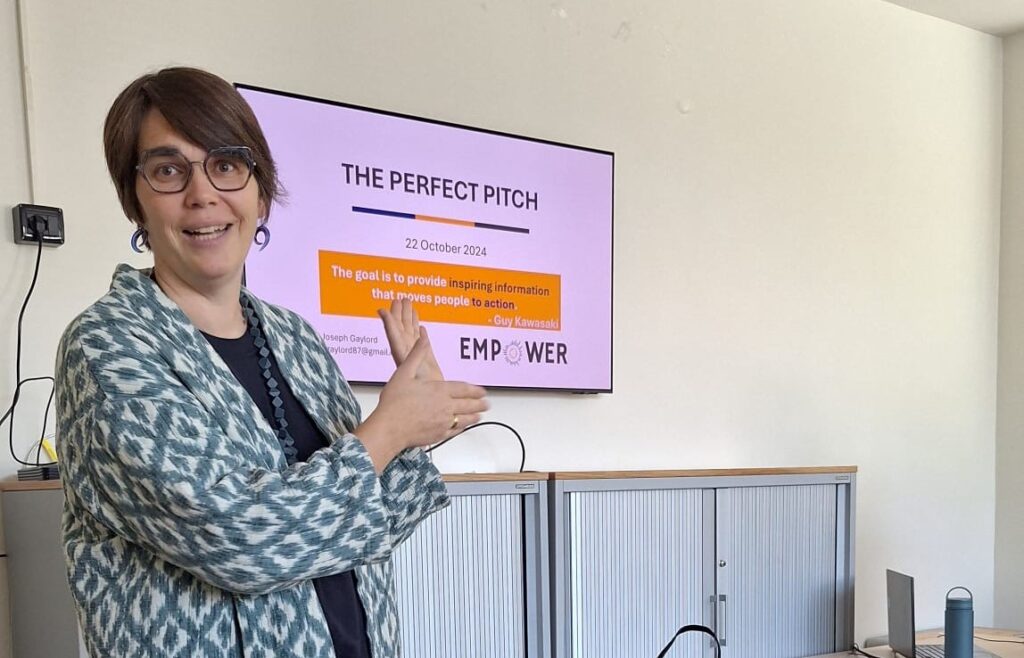
On October 22nd, Joseph Gaylord hosted The Perfect Pitch workshop, sharing advice on pitching and presentations, backed by 10 years of experience in startups, storytelling, and innovation. The session was filled with insightful questions and lively discussions, making it a truly rewarding experience.
If you missed the workshop, don’t worry—you can still catch up! Here’s a quick recap of what we covered, ensuring you’re equipped with the tools to craft impactful, compelling pitches.

Stay tuned as I share key takeaways to help elevate your presentations and storytelling skills.
Purpose and Mindset
Pitching seems straightforward, but it’s important to keep your goals in mind while you’re presenting. Guy Kawasaki is one of the gurus of pitching and said: “The goal is to provide inspiring information that moves people to action.” Three words from that jump out.
First, you’re providing information, a pitch is meant to give a clear and concise description of a project or idea. They need to leave with a clear idea of:
- What you do and will do?
- Why you do it?
- What you need?
- How they can help?
- Why they can trust you?
Second, it is meant to be inspiring, a pitch is a kind of performance, where you’re engaging the audience and generating enthusiasm for what you’re discussing.
Finally, it should move people to action. You are presenting with a goal in mind, and you’re asking the audience for something, whether that’s investment, buy-in, or word of mouth attention. Always make it clear what you want from the audience and why they should support you.
Critical Elements
There are three key kinds of pitch, depending on context, time, and objectives, elevator pitches, investor decks, and “standard pitches”. I’ll present some general formats for the pitches, but keep in mind that the story you’re using to convince your audience is essential, so change the formats however you need to make your presentation work.
An elevator pitch is named for the idea that you’re in an elevator with your dream investor and you have 30 seconds to present. You might use it as an initial introduction, during networking events, or if someone wants to start a conversation about your idea. It’s a brief pitch, verbal only, intended to spark interest.
I use this format for an elevator pitch:
For (Target group) who has/ needs/ wants (Problem) (Project name) uses (Method or Technology) to (Core activity) which (Benefit).
Using this pitch format to present EMPOWER would be:
For Partners and spouses of JRC Staff who feel disrupted after moving to Ispra EMPOWER provides networking, professional development, and a community to help them continue their careers and professional lives which improves their wellbeing and the attractiveness and community of the site.
An investor deck is a long presentation which is meant to be read. It includes all of the details the reader might need to make a decision about supporting you. Even if it’s presented as a brochure, business plan or report, the contents, rhythm and style should match how your other pitches would be structured.
A standard pitch is what you see on shows like Shark Tank or Dragon’s Den. It’s usually about 10 minutes, with 10 or so slides, presented from a stage. The goal is to get people excited about a project. A typical set of slides would include:
- Title: Give your project’s name, your contact info, and a sentence to spark interest.
- Problem: Explain the issue you’re working to address, who you’re going to help, and why it’s so significant.
- Solution: Briefly give a description of what you’ll do to address the problem.
- Product, Innovation & Technology: Provide more details in terms of how you’re going to provide the solution.
- Team: Give an introduction to the team behind the project, and why they’re the best people to do it.
- Customers & Market: Outline the scale of the problem, how many people are affected, and any metrics (especially financial ones) that explain the significance.
- Channels & Go-To-Market: Describe how you’re reaching out to your audience and how you’ll sell to them.
- Competitive landscape: Outline competitors or potential collaborators, what alternatives exist for your solution, and why your idea is better than what exists.
- Business model / Revenue Model: Explain how you will pay for your idea, what funding streams you need, and why they’ll give you the resources.
- Current status & Roadmap: Illustrate where your idea started from, where it will go, and how you’ll track your progress.
- Key asks: Tell the audience what you need from them to make your idea happen.
You can also describe the vision for the project, its expected impact, the origin or inspiration behind it, what a user experience would look like, and what partners you have or need. However, be mindful of bloat, don’t let the pitch get too long, remember it’s an initial presentation.
Presentation Style
Remember a pitch is a performance. You want to get the audience excited and interested in your idea. Share a bold vision, show your excitement, interact with your audience, start and end strong, and keep the presentation moving.
To move your audience, classical rhetoric can be useful. In rhetoric, there are three ways of convincing people, logos, ethos, and pathos. Logos is an appeal to logic, showing something by statistics, facts and evidence. Ethos is an appeal to people, showing why you and those who support you are trustworthy sources on the topic. Finally pathos is an appeal to emotion, using stories or individuals with emotional impact. It’s best to include all three in a pitch, but your idea, and your audience, will usually work best with one that you can rely on.
In addition to rhetoric, you can make your pitch “S.Ex.I.” by presenting ideas three times. You State your idea, giving a simple description to the audience. You Explain, giving supporting details and information. Then you Illustrate, giving stories or examples that support what you’re saying. This strategy can support your statements.
Finally, a few notes on pitch decks: First, keep things simple. Make your slides visual, keep text minimal, and show one idea per slide. Second, remember you are the presentation, not the slides. Don’t simply read the slides, and make sure the audience is pay attention to you, not the slides. Finally, remember you’re telling a story. Use structures and rhythms to frame what you’re saying, and have ideas that provide a consistent theme throughout the presentation.
As always, feel free to send us an email to get the full presentation, and you can reach Joe Gaylord on LinkedIn, by email at jgaylord87@gmail.com or at the collab space.

Want to know more about our workshops? Don’t miss the next events! Prefer just a networking event? That’s great too—but make sure to join us as a member to enjoy these benefits and so much more.